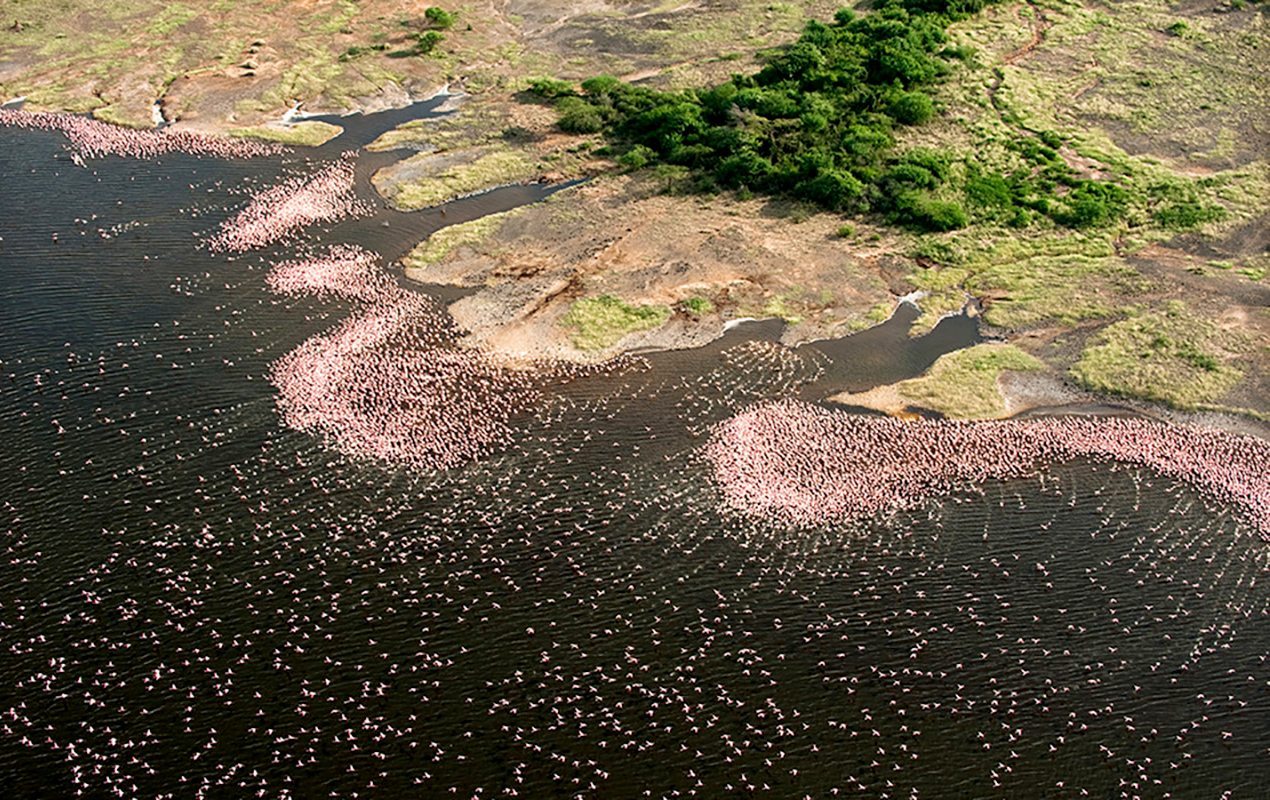
The Northern Frontier
Lake Turkana and the Suguta Valley
The jade sea, the volcanic cones of the Suguta and some of the most remote country in Africa, reached in a morning from Laikipia and returned by dusk.
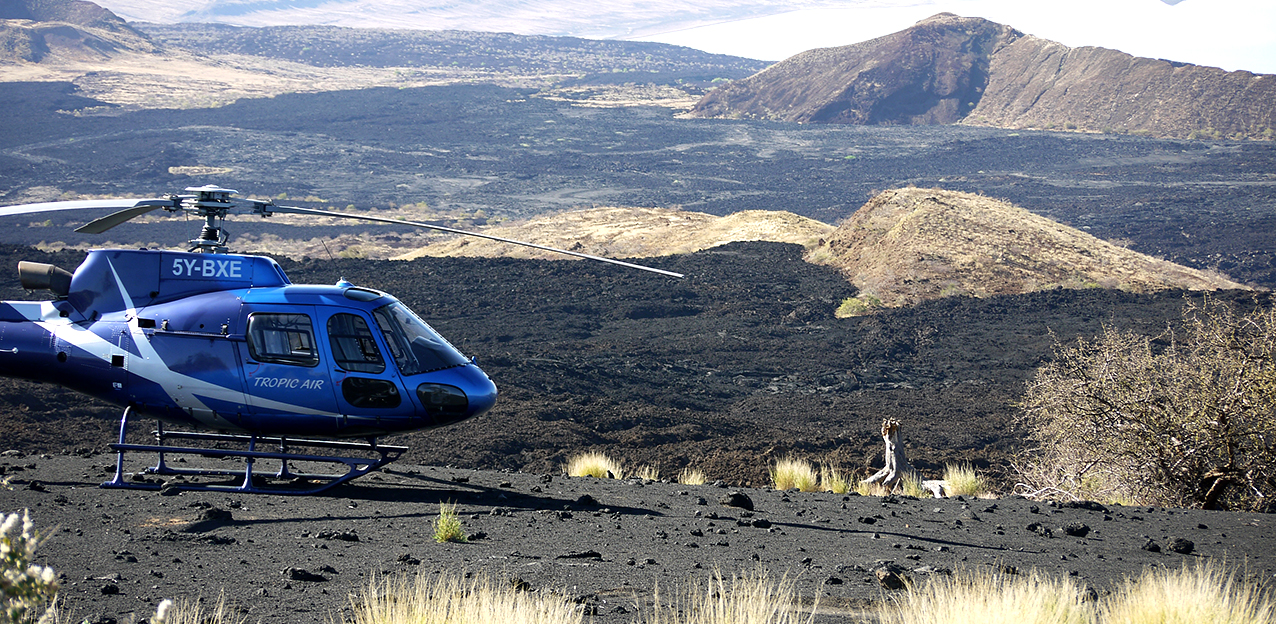
Helicopter Safaris · Kenya, Tanzania, the Seychelles and Mauritius
See the country the roads never reach. Helicopter transfers between the Maasai Mara, Laikipia and Amboseli, flights over the northern Serengeti, and days out to Lake Turkana and Mount Kenya, designed around your safari by our team in Nairobi.
Transfers and excursions in Kenya and the northern Serengeti, with island hops in the Seychelles and Mauritius.
A helicopter safari uses a private helicopter and pilot to move between camps and reach places no road can. We arrange helicopter transfers between the Maasai Mara, Laikipia and Amboseli, flights in the northern Serengeti, island hops in the Seychelles and Mauritius, and days out to Lake Turkana and Mount Kenya. As a guide for 2026 to 2028, flying costs around USD 3,500 to 4,500 per hour.
Every flight is designed around your camps and quoted exactly for your route. See the transfers, where we fly and what it costs.
 By Abner Ongeri, founder, Karen, Nairobi. Updated September 2026, with guides for 2026 to 2028.
The landscapes we fly guests to most often. Every flight is designed around your safari, and each one can be added as a single day.
The jade sea, the volcanic cones of the Suguta and some of the most remote country in Africa, reached in a morning from Laikipia and returned by dusk.
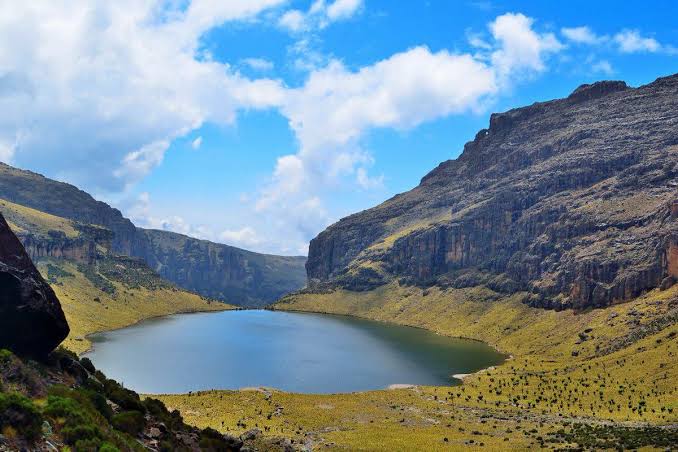
Across the moorland to the glacial lakes near the summit, with breakfast beside Lake Alice or Lake Ellis and trout fishing at Lake Rutundu.
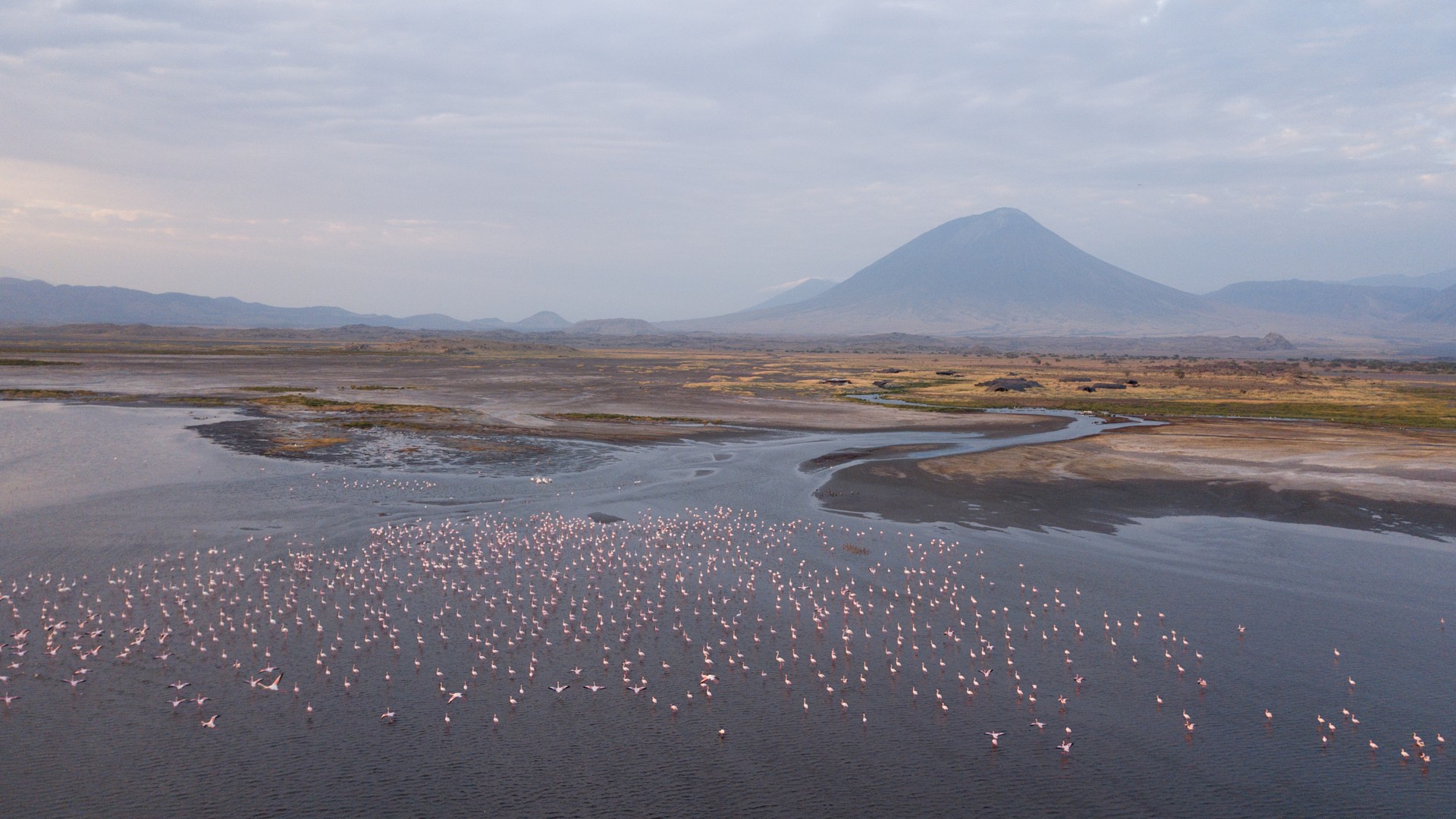
The flamingo shallows of Lake Natron beneath the only active carbonatite volcano on earth, across the border in a single flight.
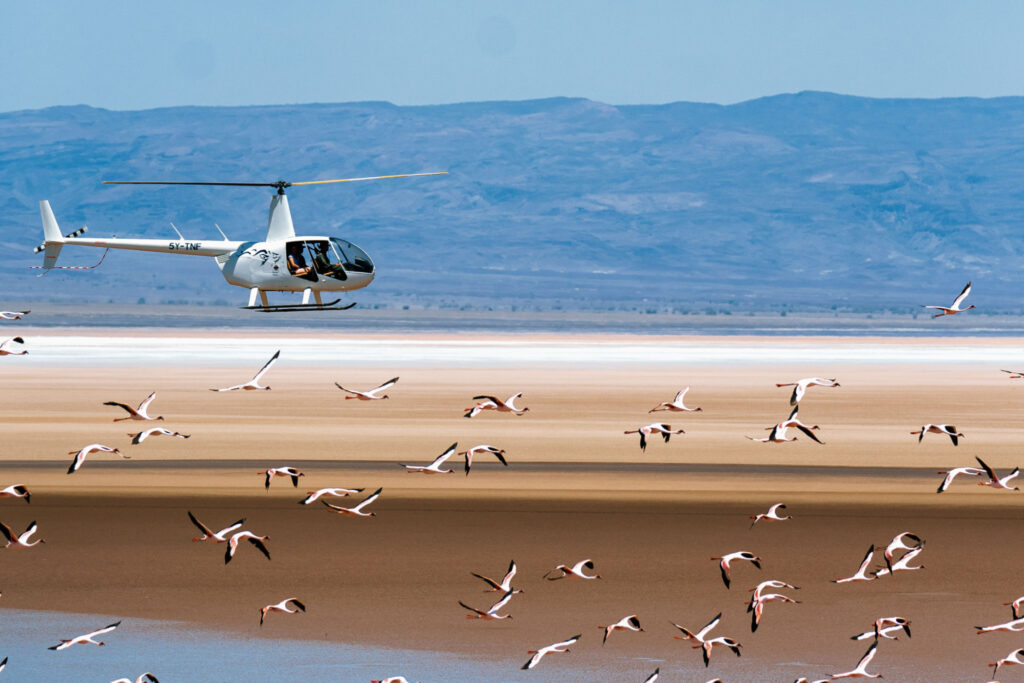
Pink soda flats, the hidden waterfalls of the Nguruman Escarpment and the Rift Valley floor, an easy flight from Nairobi or the Mara.
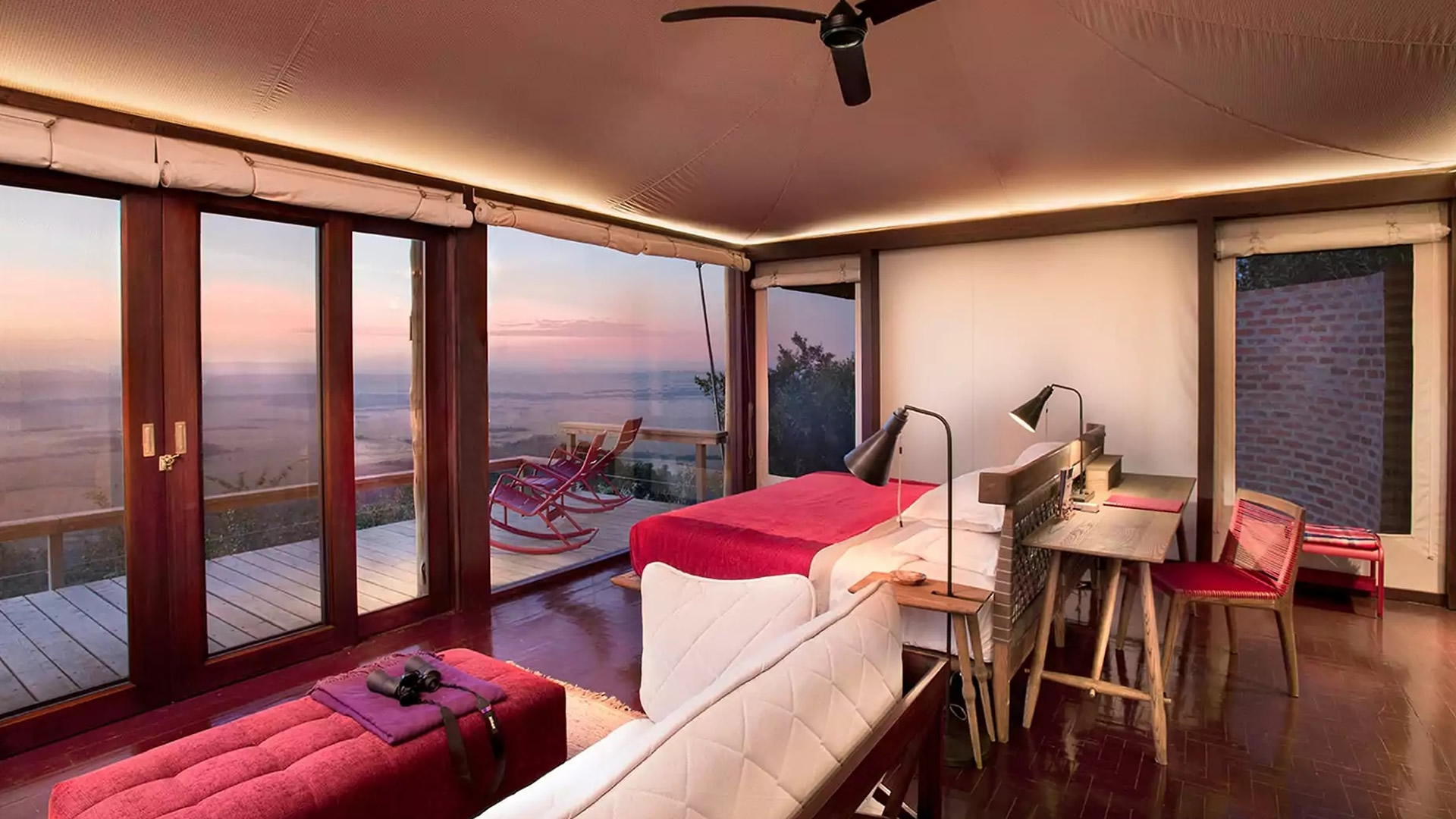
A breakfast or a picnic on the rim of the Oloololo Escarpment with the whole of the Mara below you, and transfers between camps.
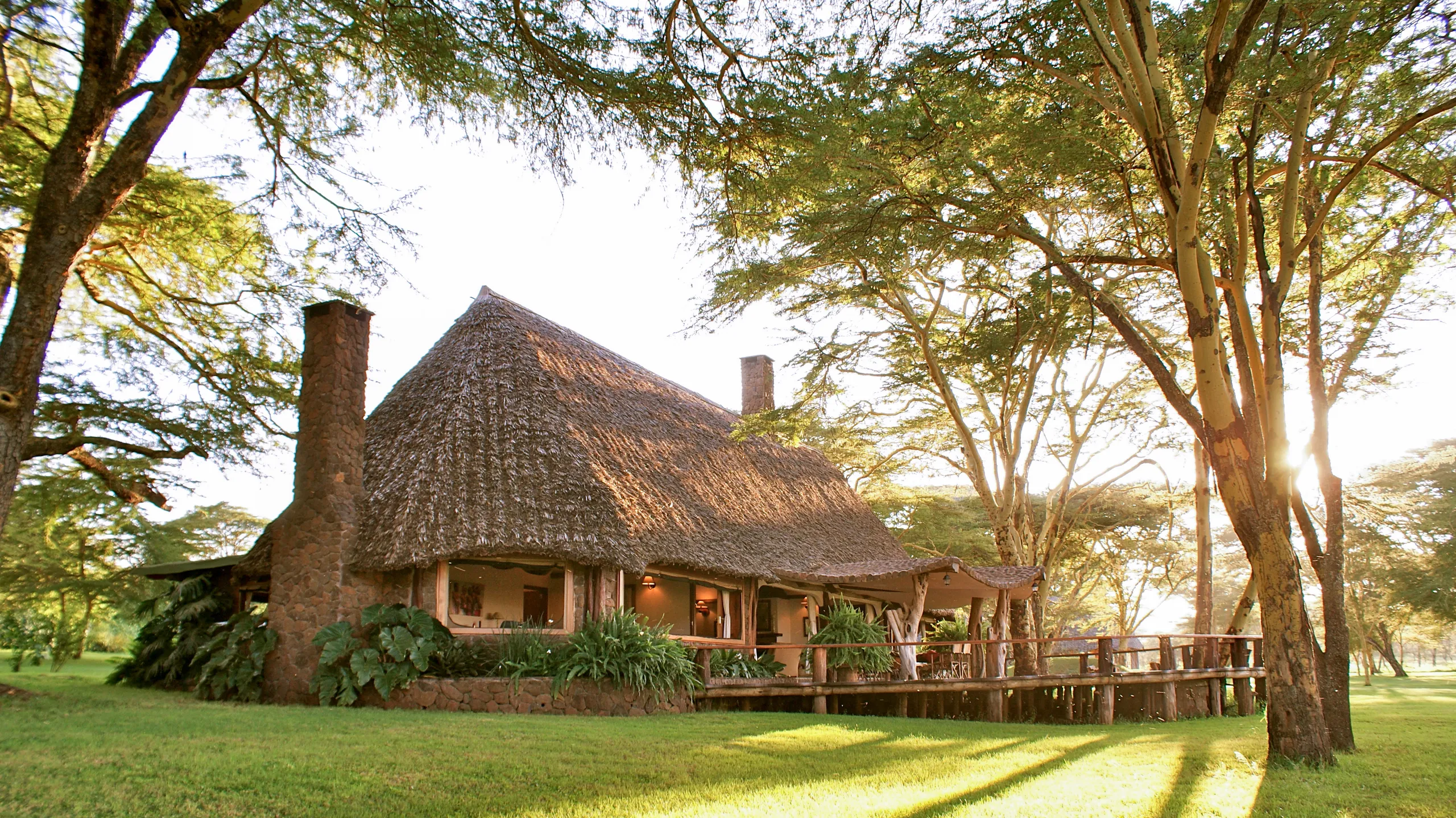
Replace a long road day with an hour in the air, Maasai Mara to Laikipia or Amboseli, landing close to camp in time for the afternoon drive.
Most of our guests first fly by helicopter on a transfer. These are the routes we arrange most, with approximate flying times.
Flying times are approximate and depend on the aircraft and the weather. Luggage is limited to soft bags on transfers, and heavier bags can travel by road.
The places a helicopter reaches that nothing else can, with typical flying times from Laikipia, where most helicopter safaris begin.
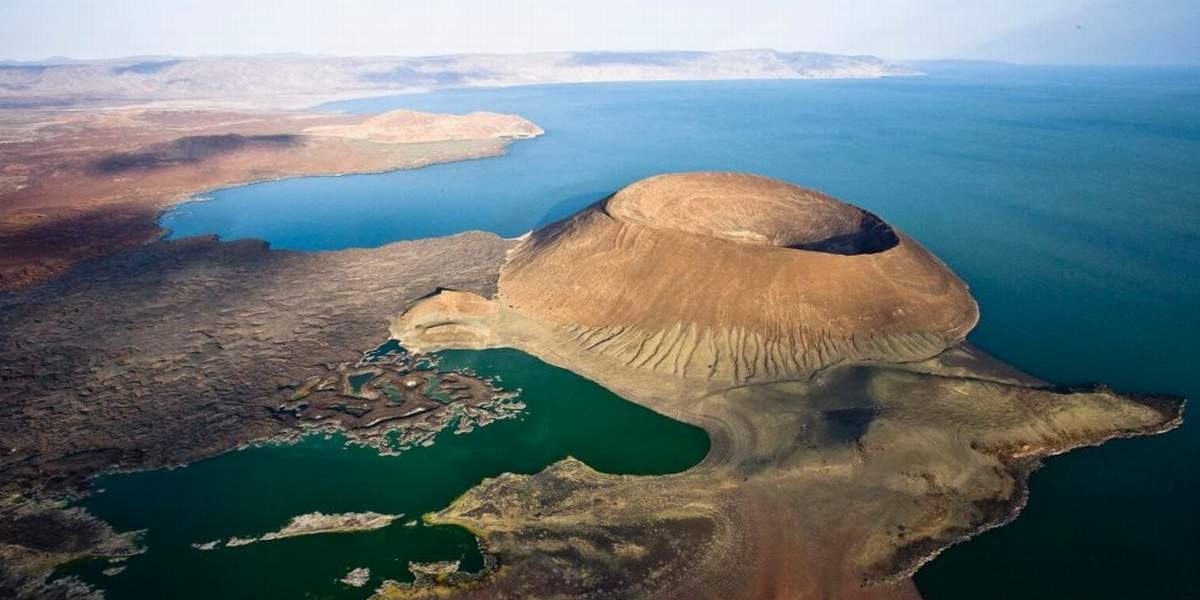
About 1.5 hours each way from Laikipia
Lake Turkana is the largest permanent desert lake in the world, the jade sea of the northern frontier. On the way, the Suguta Valley opens beneath you: the flamingos of Lake Logipi, the sand dunes of the Suguta desert, Cathedral Rock, the cones of Teleki's Volcano and the Nabuyatom Crater on the southern shore. Almost none of it can be reached comfortably by road, which is why guests remember this day above all others.
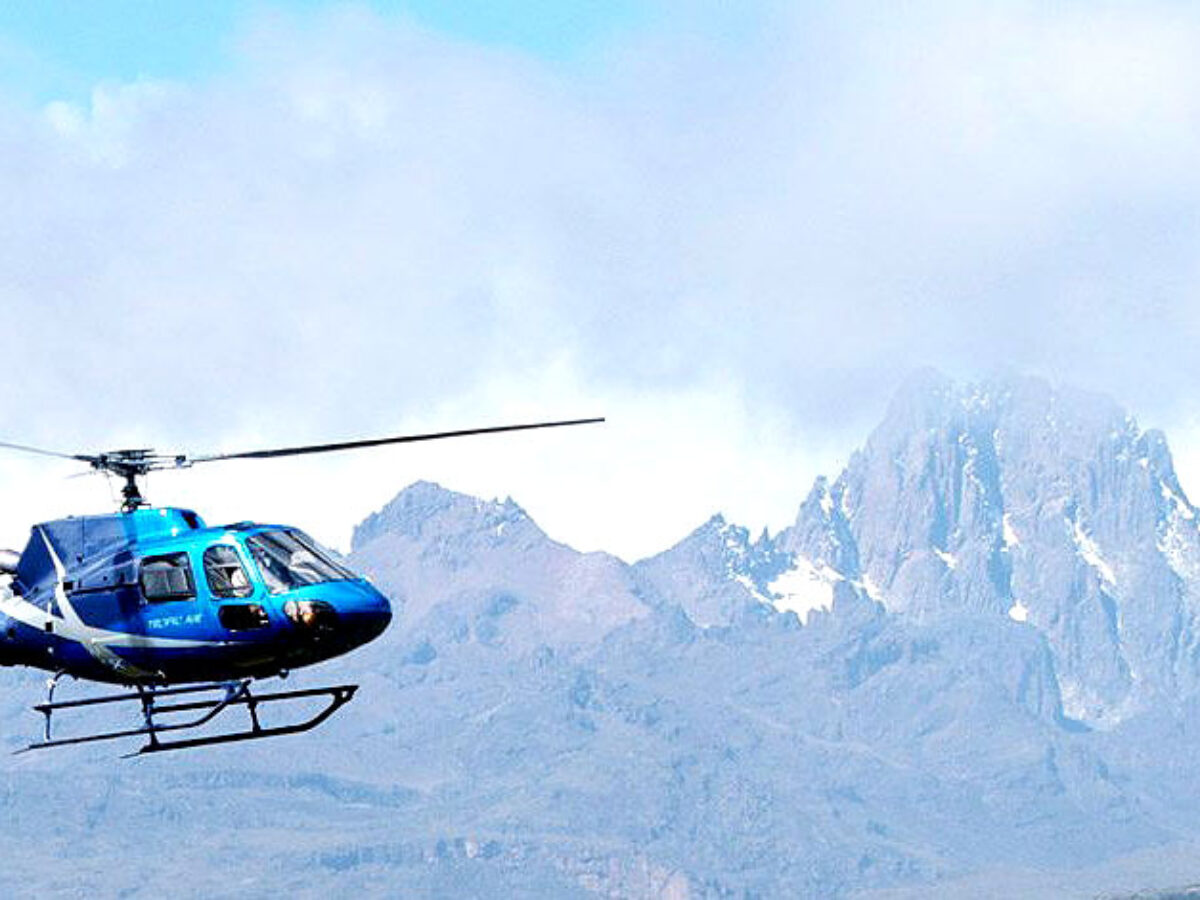
About 30 to 45 minutes from Laikipia
An early departure, around half past seven before the cloud builds, takes you past the peaks of Batian and Nelion to land beside the glacial lakes near the summit: Lake Alice, Lake Ellis and Lake Michaelson. Breakfast on the mountain, then trout fishing at Lake Rutundu for those who want it.
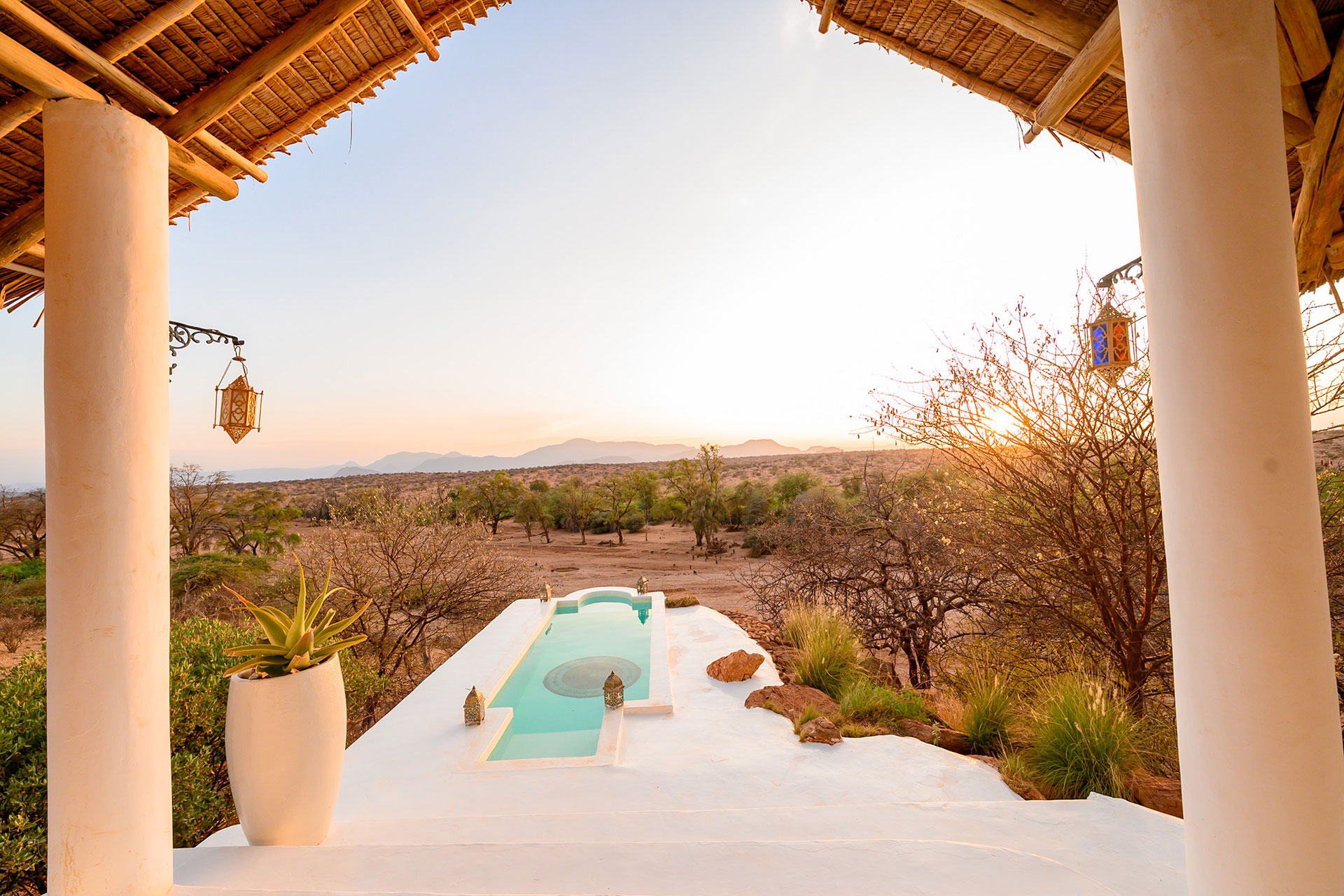
About 30 to 60 minutes from Laikipia
Forested mountains rising out of dry country, the cycad forests of the Ndotos, the flat top of Ol Lolokwe, and the Reteti Elephant Sanctuary, the first community owned elephant sanctuary in Africa. The Singing Wells of the Samburu people make an unforgettable stop.

A long day from Laikipia
Salt pans, wind carved rock and the forested island of Mount Kulal rising from the desert. Some of the emptiest country in Kenya, visited by very few people, and usually combined with Lake Turkana.
Reached from Nairobi or the Maasai Mara
Pink soda flats at Lake Magadi, hidden waterfalls on the Nguruman Escarpment, and, across the Tanzanian border, the flamingo shallows of Lake Natron beneath Ol Doinyo Lengai, the only active carbonatite volcano on earth. Crossing the border requires clearance, which we arrange.
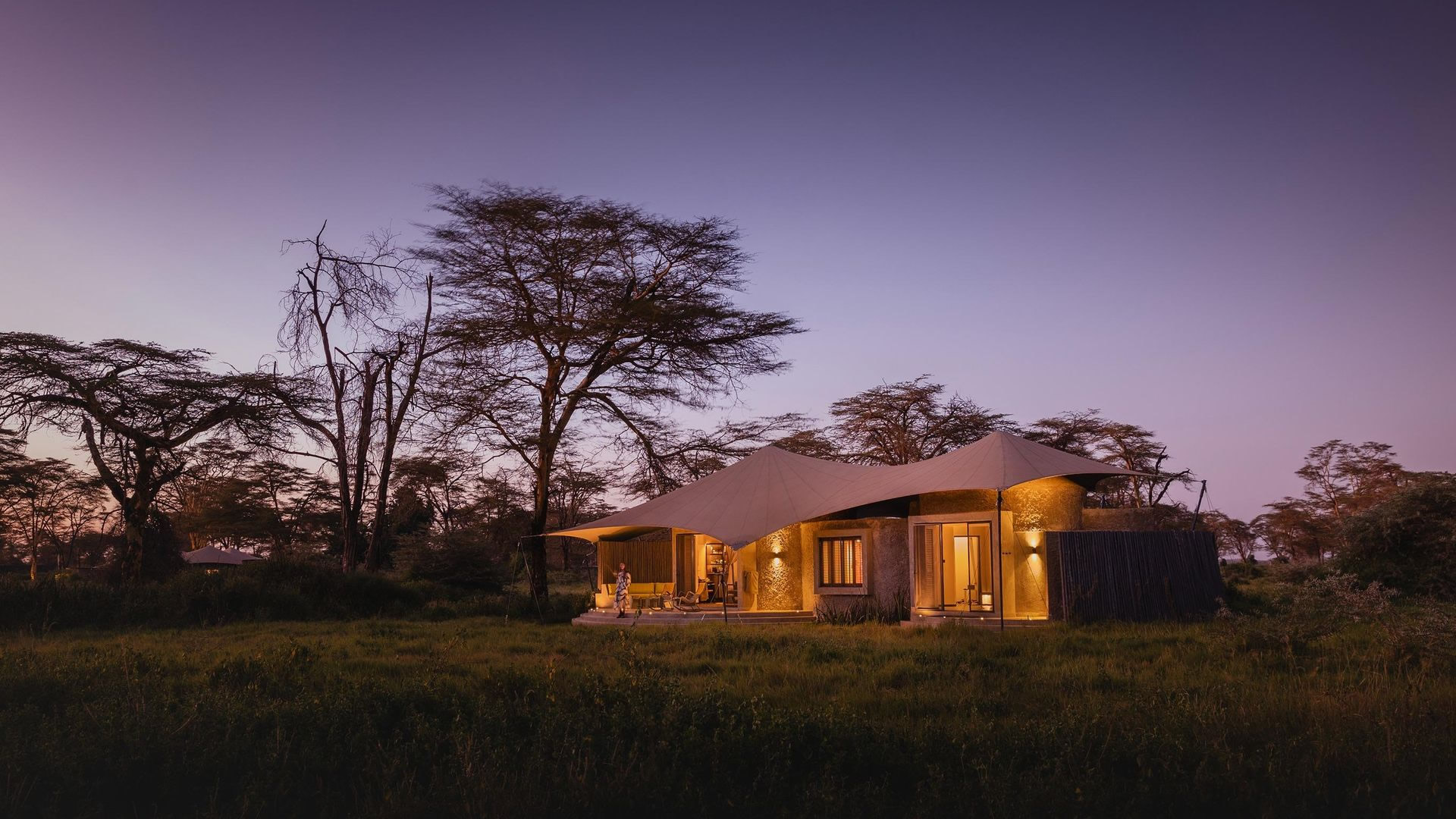
Transfers and scenic flights outside the parks
In the Mara and Amboseli, helicopters are used mainly for transfers between camps, for breakfast on the Oloololo Escarpment, and for flights along the boundaries. Low flying over wildlife inside the national reserves is not permitted, and we plan every flight within the rules.
Helicopter time is charged by the flying hour, including the aircraft reaching you and returning to base. These are guides for 2026 to 2028, per aircraft rather than per person.
As a guide, the turbine helicopters used on safari cost around USD 3,500 to 4,500 per flying hour in Kenya, as a guide for 2026 to 2028. An aircraft carries up to four or five guests, so the cost divides. We quote the exact figure for your route, including positioning, landing fees and any border clearance.
A helicopter is not a faster road. It is a different way of seeing the country, and for some places the only one.
Lake Turkana, the Suguta Valley and the Mount Kenya tarns cannot be reached comfortably any other way on a safari.
The aircraft waits for you. Leave at first light, land for lunch where you choose, and return when you are ready.
A transfer that would take a day by road becomes forty minutes, and the rest of the day becomes a game drive.
From the air, the Great Rift Valley and the northern volcanoes finally make sense. Guests say it changes how they see the whole trip.
Within the rules of the land and the owners, the helicopter lands where the view is, not where the airstrip happens to be.
We design helicopter days around your camps, so the flying fits the journey rather than interrupting it.
Five steps, with a designer in Nairobi and a named pilot at each one.
What every guest should know before a helicopter day, so nothing on the morning comes as a surprise.
Soft bags only, usually around 15 kilograms per guest including cameras. Heavier luggage can travel by road to your next camp.
Most aircraft take up to four or five guests with the pilot. Heat, altitude and fuel affect what can be carried, and we plan around it.
Pilots fly by sight in the highlands. If cloud or rain closes in, the flight moves to the spare morning we build into every plan.
There is no low flying over wildlife in the national reserves, and landings follow the rules of each park and landowner.
Charged by the flying hour, including the aircraft reaching you and returning to base. Short hops are efficient; long positioning is not.
We work with licensed Kenyan operators based in Laikipia and Nairobi, chosen for their safety record and their knowledge of the north.
Visibility decides a helicopter day more than anything else, so the season matters.
The best flying of the year: dry, clear and settled. Mount Kenya can have more morning cloud in July and August, so we fly early.
Hot and clear, with superb visibility over the northern frontier and Lake Turkana.
The long rains bring cloud to the highlands. Flying is possible on good days, and we always keep a spare morning.
Short afternoon showers, with clear mornings that suit early flights well.
Three ways to move between places on a Kenyan safari, and what each one gives you.
| Helicopter | Light aircraft | Road | |
|---|---|---|---|
| Reach | Anywhere with a safe landing site, including Lake Turkana and Mount Kenya | Airstrips only | Roads only |
| Time | The fastest door to door | Fast between airstrips | The slowest |
| Luggage | Around 15 kilograms in soft bags | Around 15 kilograms in soft bags | No practical limit |
| Cost | Highest, by the flying hour | Moderate, often by the seat | Lowest, by the day |
| Best for | Remote landscapes and a day you will never repeat | Linking camps efficiently | Seeing the country between the parks |
Read road or fly in, honestly compared, or see luxury road safaris.
We would rather place you correctly than sell you flying you do not need.
Straight answers from our team in Nairobi. For your own plans, a designer replies within 24 hours.
+254 711 471 757 Call or WhatsApp, Nairobi Speak to an ExpertHelicopter time is charged by the flying hour, including the time the aircraft takes to reach you and return. The cost depends on the aircraft, the route, the number of guests and the landing permits needed. We quote the exact figure for your route before anything is booked.
Most safari helicopters carry up to four or five guests with the pilot, though heat, altitude and luggage reduce what an aircraft can lift. Larger parties fly in two aircraft together. We plan seating and weight with the operator in advance.
We work only with licensed operators whose pilots fly the Kenyan highlands and northern frontier every week, with maintained aircraft, satellite tracking and a flight plan filed for every day. If weather or visibility is not right, the pilot does not fly, and we move the day.
Low flying over wildlife in the national reserve is not permitted, and landings are restricted to approved sites. Helicopters are used in the Mara mainly for transfers and for escarpment picnics outside the reserve. The true helicopter country is Laikipia, the northern frontier and Mount Kenya.
Soft bags only, and weight is limited, usually around 15 kilograms per guest including camera equipment. Heavier bags can travel separately by road to your next camp. We confirm the limit for your aircraft in writing.
Yes. Children fly with a parent, with ear defenders and a proper harness. The pilot briefs everyone before take off. Tell us the ages of your children and we will plan flights of a length they will enjoy.
Yes, and it is one of the finest vantage points in Africa. Some flights can be arranged with doors removed for photography, subject to the aircraft and the operator. Tell us your equipment and we will brief the pilot.
Your pilot decides on the day, and safety always comes first. We build a spare morning into helicopter itineraries, so a cloudy day moves rather than disappears.
Yes, and that is how most guests use it. A single day from Laikipia to Lake Turkana, or a helicopter transfer between camps, transforms a journey without changing the rest of it.
Three to six months for most dates, and longer for the July to October peak and the festive season, when aircraft are in demand across the country.
Yes, it is the transfer we arrange most often. It takes about an hour and a quarter over the Rift Valley, compared with a full day by road, and the helicopter lands close to your Laikipia camp. The Maasai Mara to Amboseli transfer takes about the same time.
Yes, mainly in the northern Serengeti, for transfers between camps and airstrips in the Lamai and Kogatende area and for flights in the crossing season, always within the rules of the national park.
Yes. In the Seychelles, helicopters link Mahe with the private islands, Praslin and La Digue, and fly scenic routes over the granite coast. In Mauritius, they fly from the airport straight to your resort and over Le Morne and the lagoons. We arrange both as part of your beach stay.
For most guests, the Suguta Valley and Lake Turkana day from Laikipia: Lake Logipi, Cathedral Rock, Teleki's Volcano and the jade water of the largest desert lake in the world, none of which is easy to reach by road. A Mount Kenya breakfast flight is the best shorter option.
About an hour and a half each way from Laikipia, usually with stops in the Suguta Valley, so a Lake Turkana day is three to four flying hours in total and returns before dusk.
Yes, at approved sites beside the high tarns, such as Lake Alice and Lake Ellis, weather permitting. Flights leave early, around half past seven, before cloud builds on the mountain.
Mostly single engine turbine helicopters such as the Airbus H125, which carry up to five guests with the pilot and cope well with the altitude of the Kenyan highlands. The operator confirms the aircraft and its seating for your flight.
Tell us what you would like to see from the air and where you are staying, and a designer in Nairobi will send a flying plan and an exact price within 24 hours.
Travelling further? See private jet journeys, luxury road safaris and safaris in Kenya.