
In short
- A private vehicle in Kenya usually costs about USD 450 to 900 a day, depending on the camp, the season and whether it travels with you.
- What you buy is control of time: when you leave, how long you stay at a sighting, and where you have breakfast.
- It is worth it for photographers, families with young children, groups of four or more, and for the Mara crossing season.
- It is often unnecessary at small conservancy camps, where drives already carry two or three guests and the schedule bends.
- In Tanzania, a driving safari is private by design, while a fly in safari shares vehicles within your camp.
- If the money would otherwise buy a better camp or an extra night, take the camp or the night first.
Every proposal we send carries a line for it, and the same question comes back: do we really need our own vehicle?
Sometimes, emphatically. Often not. Here is how we decide, and what we tell guests when the honest answer is no.
What a shared drive actually means
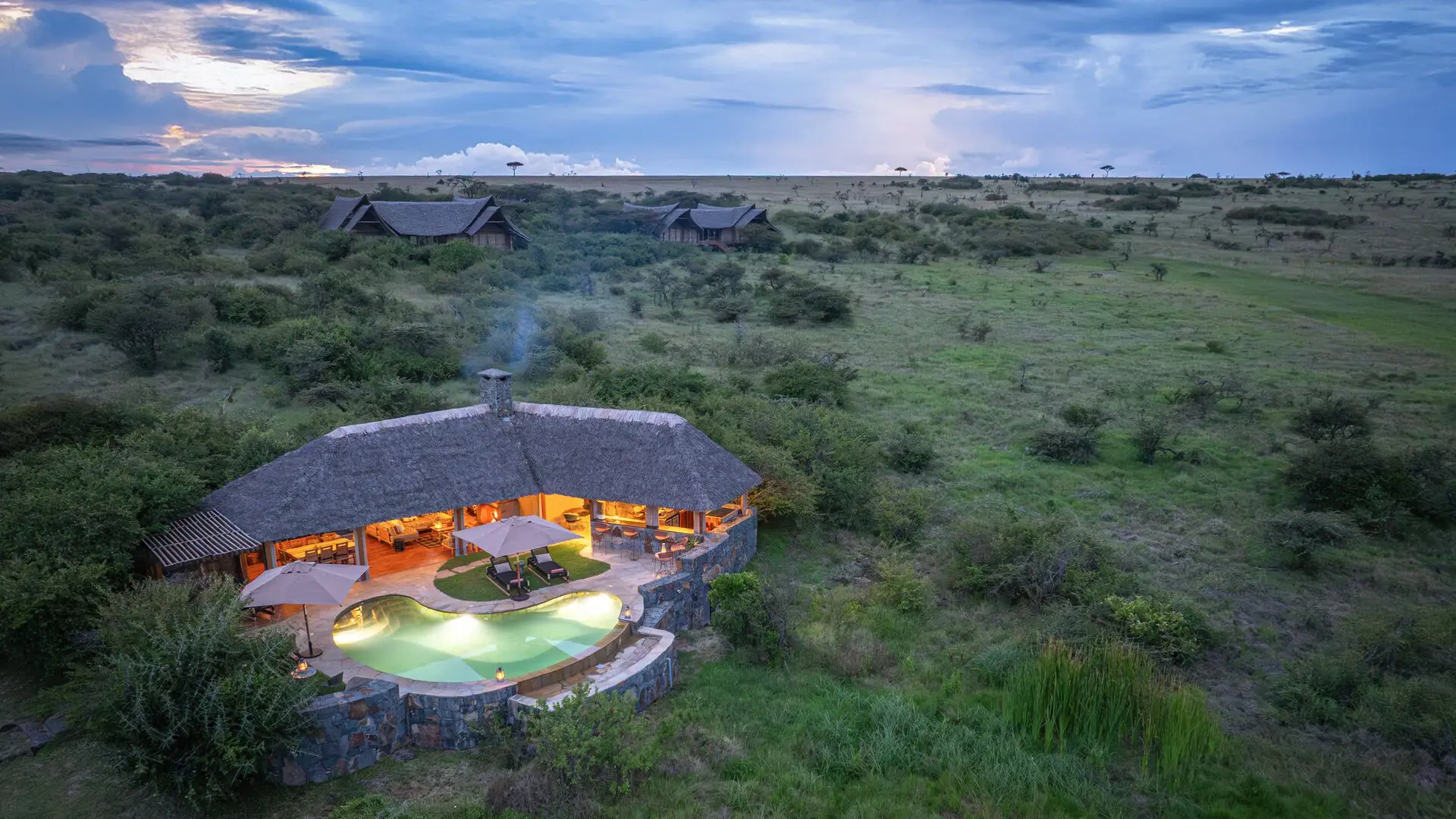
At most luxury camps, a shared game drive means four to six guests in a vehicle with your guide, leaving at a set time, usually around six in the morning and four in the afternoon, and returning for meals.
Good camps are careful about it. They rarely fill every seat, they place photographers on their own row, and they will move the schedule if the whole vehicle agrees. What they cannot do is send you out at half past five because the light is right, or hold everyone at a leopard for two hours because you are the one with the lens.
What you are buying
A private vehicle, in short
- Typical cost, Kenya
- USD 450 to 900 per day
- What it includes
- Your own vehicle, guide and schedule
- Best value at
- Four or more guests travelling together
- Least value at
- Two guests at a small conservancy camp
- Biggest gain
- Time: when you leave, and how long you stay
- Alternative
- A better camp, or one more night, for the same money
- Time. Leave when you like, stay as long as you like, return for lunch or do not.
- Position. Your guide moves for your side of the light without asking five other people.
- Pace. Small children can go back after two hours. Teenagers can leave at dawn. Nobody resents anybody.
- Silence. The kind a good guide keeps at a sighting, which is worth more than most guests expect.
- Conversation. Your guide becomes yours: the questions, the stories, the tracking, all directed at your party.
What it costs
As a guide, in Kenya expect roughly USD 450 to 900 a day, depending on the camp, the season, and whether the vehicle is based at camp or travels with you between areas. Some camps include it with their largest suites, or from four guests travelling together.
| If you are | The arithmetic | Our usual advice |
|---|---|---|
| Two guests | The whole cost falls on two people | Only for photography, crossings or a celebration |
| Three or four guests | Per person it roughly halves | Usually worth it, particularly with mixed interests |
| Five or six guests, or a family | You have effectively taken the vehicle already | Take it privately and buy the schedule too |
You can see the effect on a full quote in our safari cost estimator, which lets you add a private vehicle to any leg and watch the total move.
The six times we say yes
- You photograph seriously. Long lenses, early light, and the patience to wait. The difference is enormous.
- Crossing season in the Mara. Waiting at the river can take five hours. On a shared drive, one guest who wants lunch ends the wait for everyone.
- Young children. Two hours out, back to the pool, out again at four, with nobody else inconvenienced.
- Mixed interests. One guest wants birds, another wants only cats. A private vehicle ends the negotiation.
- Four or more travelling together. The cost per person falls to the point where it is barely a decision.
- A honeymoon or a celebration. Breakfast alone in the bush is the memory, and it needs its own vehicle.
The four times we say no
- Small conservancy camps. When a camp has eight tents and three vehicles, your shared drive may carry two other guests and leave when you ask.
- Two or three nights only. Spend the money on another night instead. More time in the right place beats more control of a short stay.
- Green season. Camps are quiet, vehicles half empty, and the flexibility comes free.
- When it would cost you a better camp. A better camp with shared drives beats a lesser camp with a private vehicle, almost every time.
Kenya and Tanzania are different
| Type of trip | How the vehicle works |
|---|---|
| Kenya, fly in safari | Camps run their own vehicles and share them among their guests. A private vehicle is an optional daily charge. |
| Tanzania, driving safari | A vehicle and guide travel with you from Arusha throughout, so the trip is private by design. |
| Tanzania, fly in safari | As in Kenya, camps share vehicles among their own guests, and a private vehicle can be added. |
| Private concessions, such as Grumeti or Mwiba | Vehicles are usually shared only within your own party in any case. |
If you photograph seriously
Take the vehicle, and take it in a conservancy rather than the national reserve, where your guide may leave the road. Ask us for a guide with photographic experience, tell us your lens lengths, and we will match the seat layout to the equipment. Bean bags, charging and a vehicle with open sides on both flanks all matter more than most guests realise.
If the Mara is the destination, read reserve, Triangle or conservancy first. Off road permission changes photography more than a private vehicle does.
If you travel with children
For families with children under about eight, we recommend a private vehicle almost automatically, and we say why: children set their own pace, and a shared vehicle asks a five year old to sit still for four hours because two other guests are waiting for a lion to move.
With a private vehicle, a family morning can be two hours of game viewing, a picnic breakfast, and back to the pool by ten. It turns a trip that could be tense into one that is easy.
How we show it in a proposal
The private vehicle appears as its own line, with the daily cost and the total, so you can see exactly what it adds and remove it in a sentence. When we think it is unnecessary at a particular camp, we say so in writing and leave the money for an extra night or a better suite.
We are also happy to split it: private in the Mara during the crossings, shared in a quiet conservancy afterwards. It is the cheapest way to buy control exactly when it matters.
Written by Abner Ongeri, founder of Ongeri Expeditions in Karen, Nairobi. We visit every camp we sell, and we plan these journeys every week. Last checked 11 September 2026.