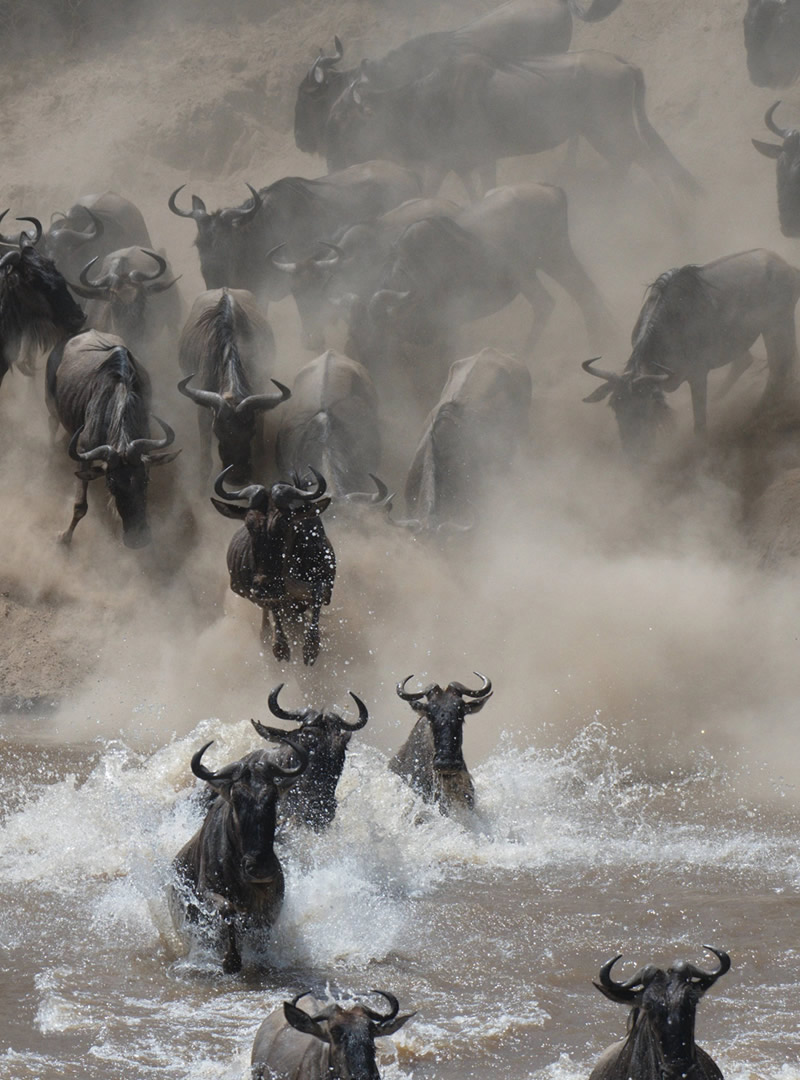
The Great Migration is one of the last truly great spectacles on earth. More than a million wildebeest, joined by hundreds of thousands of zebra and gazelle, move in a vast circle through the Serengeti in Tanzania and the Masai Mara in Kenya. Witnessed well, from the finest camps, with a private guide and expertly chosen timing, it is the safari of a lifetime. The question we are asked most is the simplest one. When is the best time to see it?
The honest answer is that the herds reward you all year, and the perfect moment depends on what you most wish to witness. This is a month by month guide to where they are and what is unfolding, written so we can time your journey to the season and place you in exactly the right camp. Every moment below can be shaped into a private Great Migration safari across Kenya and Tanzania.
The short answer
For the famous Mara River crossings, plan to travel between late July and October, with August and September at the peak. For the drama of calving season and big cats on the hunt, choose late January and February in the southern Serengeti. For green landscapes, lower rates and blissful privacy, the months from April to June are quietly spectacular. The detail below explains why.
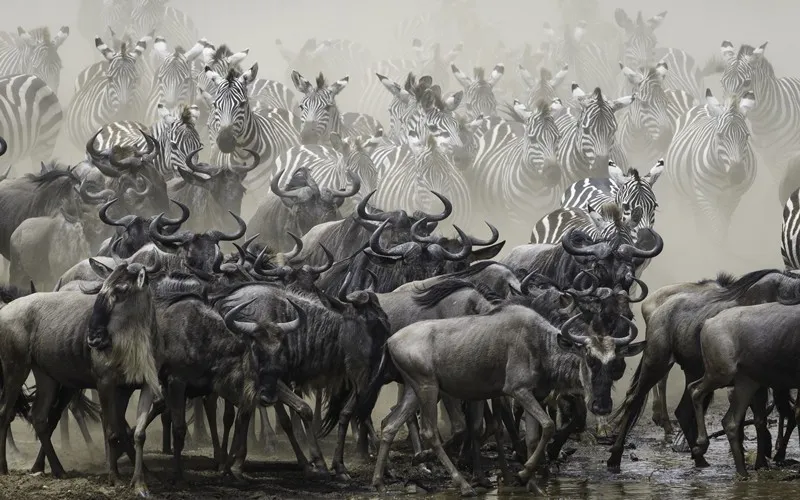
January to March: calving season in the southern Serengeti
At the start of the year the herds gather on the short grass plains of the southern Serengeti in Tanzania and the Ndutu area, beside the Ngorongoro highlands. This is calving season, when many thousands of wildebeest are born across just a few weeks, usually peaking from late January into February. The newborn calves draw lion, cheetah and hyena, and the predator action is among the finest of the year. From an intimate tented camp here, with your own vehicle and guide, you have the spectacle almost to yourself.
April to June: the green season and the journey north
As the plains dry, the herds drift northwest through the central and western Serengeti in search of fresh grazing. April and May bring the green season, lush, cinematic and gloriously quiet, with very few other guests and the most rewarding rates of the year. By June the herds reach the western corridor and the Grumeti River, where the first crossings can unfold. For the discerning traveller who values exclusivity over crowds, this is a beautiful and underrated window.
July to October: the Mara River crossings
This is the moment the world pictures, and the reason the Masai Mara is so revered. From late July the leading herds reach the Mara River and begin their dramatic crossings into Kenya, continuing through August, September and into October. No crossing can be promised on a given day, since the animals move to their own rhythm, but August and September offer the best odds of witnessing one. This is peak season, so the most coveted camps are reserved many months ahead.
A word from experience. Staying in the Mara Triangle, the quieter western reach of the reserve, or in an exclusive private conservancy, means far fewer vehicles at each sighting than the busy central crossings. Where you stay shapes everything, so it is worth choosing with care from the finest luxury camps in the Masai Mara. For the ultimate arrival, some guests reach the herds by private helicopter, landing where the road never goes.
November to December: the return south
When the short rains arrive in Tanzania, fresh grass returns to the south and the herds begin the long journey back through the central and eastern Serengeti. November is often overlooked, yet it can be sublime, green, peaceful and softly priced, with the camps almost to yourself. By December the herds settle once more onto the southern plains, where the whole cycle begins again with the next calving.
So when should you go?
It comes down to the moment you most wish to own:
- For the Mara River crossings: late July to October, with August and September at the peak.
- For calving and the finest predator action: late January and February in the southern Serengeti.
- For green scenery, privacy and value: April to June, or November on the return.
- For the richest game viewing across the north: September and October in the Masai Mara.
One thing to hold onto. The migration follows the rains, not the calendar, so the timing shifts a little each year. The art is to choose the experience you long for, build in a few days of flexibility, and travel with people who track the herds in real time and hold the best camps. That is precisely what we do. Tell us the moment you are dreaming of and we will craft a tailormade journey around it, in unhurried luxury, from the first morning to the last.