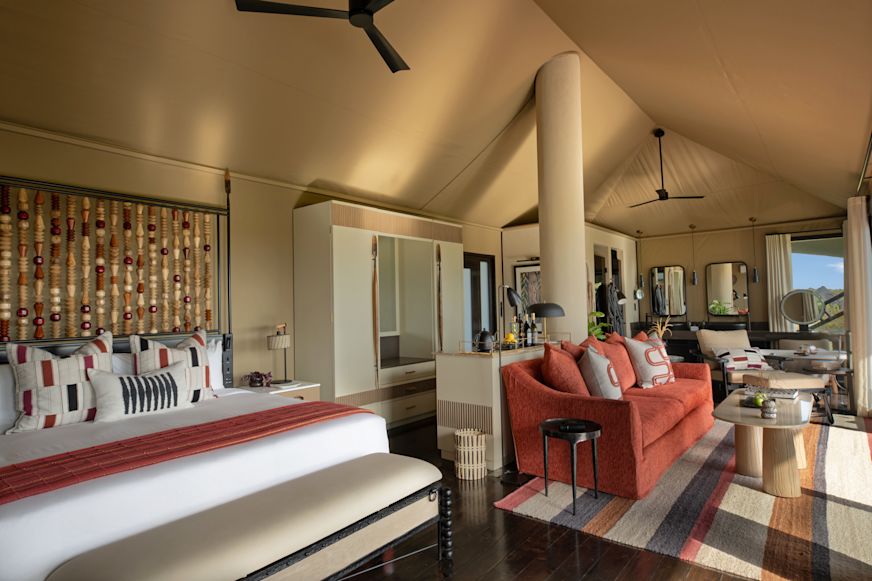
Gentler days, shorter journeys, and nothing you have to simply endure
Most itineraries are written for people in their forties with something to prove. Five o'clock starts, six hour drives, a flight of steps up to a tent on a hillside, and a camp that sounds wonderful until you need the bathroom at two in the morning.
None of that is necessary. The wildlife does most of the work while you sit still, and almost everything that makes a safari tiring is a planning decision rather than a fact of the place.
So we build these journeys backwards from what you can comfortably do. Where the room sits, how far the walk to dinner is, how long the transfer between camps takes, and whether a morning can be shortened without spoiling it.
Travelling this way, people in their seventies and eighties have some of the best trips we arrange. Slower, closer to the ground, and usually with far better photographs than the people rushing past them.
Begin a Conversation →Ongeri Expeditions designs safaris for travellers in their seventies and eighties regularly. These are the details that decide whether the trip works.
Six things you cannot tell from a brochure, and which decide the whole trip.
Not which camps. Which rooms. Whether the path to dinner is level, whether it is lit at night, whether there is a boardwalk or a gravel slope, and which specific tents sit closest to the main area. We ask for those by number.
Long road transfers are the single most tiring part of any safari, and the easiest to remove. Light aircraft turn six hours into forty five minutes, and we build the routing around that from the start.
A morning drive back by nine rather than eleven, a later afternoon start, or a day off entirely. Arranged with the camp in advance, so nobody has to justify anything at breakfast.
A step, a front seat, fewer people to a row, and a guide who has been told before you arrive rather than working it out on the first morning. Small things, and they decide whether you enjoy the drive.
Flying doctor evacuation cover for every traveller, camps chosen with realistic hospital access, and medication and refrigeration flagged to each property in advance.
We will tell you plainly where we would not send you and why, including the places that look wonderful in a brochure and would be hard work in practice. That conversation is worth more than any itinerary.
Small things, arranged in advance, that decide whether a fortnight is easy or exhausting.
Ground floor where it exists, closest to the main area, level path, lit at night. Requested by room number and confirmed before you travel rather than hoped for on arrival.
Light aircraft rather than road transfers, with no ground leg longer than about ninety minutes and at least three nights in each camp so you settle rather than pack.
Shorter drives where that suits, a cushion and a proper backrest, a vehicle you can get into easily, and no expectation whatsoever that you go out twice a day.
Flying doctor evacuation membership arranged for every traveller, medication and refrigeration flagged to each camp, and a clear plan for what happens if somebody is unwell.
No forms to wrestle with and no template itinerary landing in your inbox an hour later. We talk first, then we design.
Knees, hips, hearing, heat, early mornings, medication. Nothing is too small to mention, and all of it changes which camps go on the list.
Camps, rooms and routing chosen so the trip is comfortable throughout, rather than a standard itinerary with a caveat attached.
Room allocation, dietary needs, medication, mobility and vehicle access. So the camp is ready for you rather than adjusting once you are standing there.
Very often, yes, and we arrange them regularly. Camps at this level are genuinely comfortable, the driving can be kept short, and the wildlife does the work while you sit still. The limiting factors are usually road transfers and the walk between the room and the dining area. Both are solved by choosing carefully rather than by lowering expectations.
Tell us early and it shapes everything usefully. A number of camps have genuinely accessible rooms, level pathways and vehicles that are easier to climb into, and a few can arrange a step or a hoist. Full wheelchair accessibility is less common than camps claim on their websites, so we verify each property directly before it goes on your list.
A typical drive runs three to four hours, morning and late afternoon. On these journeys we shorten them to around two hours where that suits, and skipping is entirely normal. We arrange it with the camp in advance so nobody has to explain themselves.
Flying doctor evacuation membership for every traveller, which covers air evacuation to a Nairobi hospital from anywhere on the safari circuit. That sits alongside your own travel insurance, which we will always ask you to hold and which should specifically cover pre existing conditions.
For most of the safari circuit, no. The exception worth knowing is the Ngorongoro Crater rim in Tanzania, at around 2,300 metres, which can affect people with heart or breathing conditions. We say so plainly and offer alternatives when it matters.
Straightforward at every camp we use, but it has to be arranged rather than assumed. We flag it in advance so a fridge is available in your room or behind the bar, and we make sure your guide knows before the first drive.
June to October and January to February, when the days are dry and the roads are firm. We steer away from the hottest weeks in low lying areas such as Tsavo and the coast, and from the heaviest weeks of the green season when road transfers become slow and rough.
Far less than most itineraries impose, if it is planned properly. We aim for no ground transfer longer than about ninety minutes, and three or four nights minimum in each camp, so the days are spent enjoying a place rather than reaching the next one.
What you can comfortably do, and what you would rather not. We will build the trip around that, and be honest with you where something will not suit.