
In short
- Mara Plains Camp is a luxury camp of 7 suites on the Ntiakitiak River, in the Olare Motorogi Conservancy beside the Maasai Mara National Reserve.
- It belongs to Great Plains Conservation, the company founded by Dereck and Beverly Joubert, and it is a Relais & Châteaux member.
- Every suite has a professional camera and lenses to use, and the conservancy keeps vehicle numbers very low.
- It suits photographers, couples, honeymooners and families with children aged 6 and over.
Written by the Ongeri Expeditions team in Karen, Nairobi.
Mara Plains Camp is a luxury camp of 7 canvas suites on the Ntiakitiak River, in the Olare Motorogi Conservancy on the northern edge of the Maasai Mara National Reserve in Kenya. It belongs to Great Plains Conservation, the company founded by the wildlife filmmakers and conservationists Dereck and Beverly Joubert.
The camp is small and calm. It is built for guests who want the wildlife close, the crowds far away and the freedom to shape each day.
Our team has sent honeymooners, photographers and families to Mara Plains. This guide shares what it does well, where it may not suit you and how we plan a stay.
We are a Kenyan owned luxury safari company in Karen, Nairobi.
Mara Plains Camp at a glance
| Where | Olare Motorogi Conservancy, on the Ntiakitiak River |
| Operator | Great Plains Conservation |
| Size | 7 canvas suites, including the family size Jahazi Suite |
| Standout touch | A professional camera and lenses in every suite |
| Accreditation | Relais & Châteaux member |
| Activities | Day and night game drives, off road tracking, guided walks, balloon flights and cultural visits |
| Getting there | A light aircraft from Nairobi's Wilson Airport, then a drive of about 10 to 30 minutes |
| Children | Aged 6 and over |
| Best for | Photographers, couples and families with older children |
Where is Mara Plains Camp?
The camp sits in riverine forest along the Ntiakitiak River, in the Olare Motorogi Conservancy. The conservancy covers about 35,000 acres of private land, leased from local Maasai landowners.
Lease payments and conservation fees support more than 1,000 Maasai families, according to the camp's operator. They also keep the land wild.

The suites
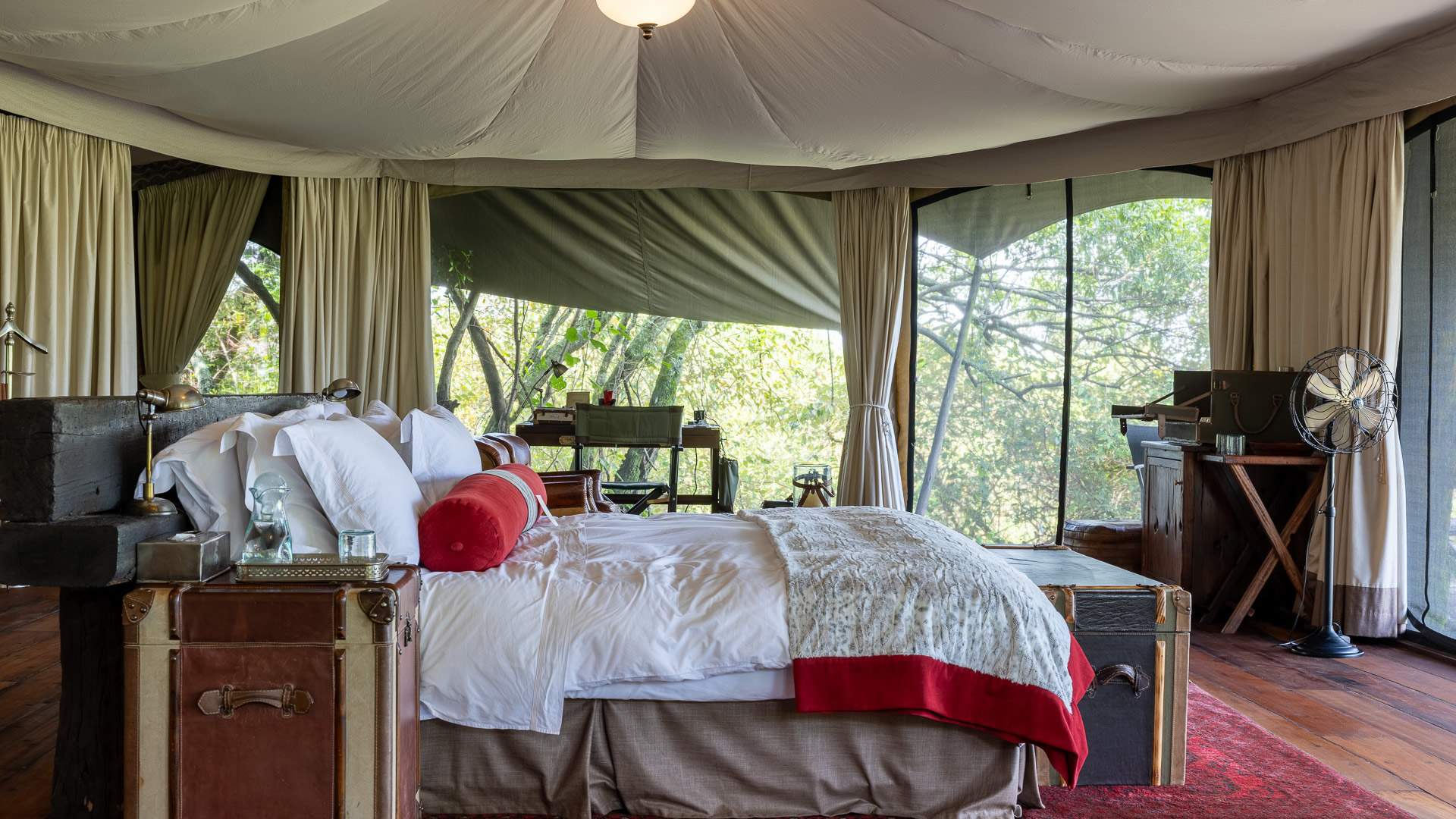
There are 7 canvas suites, raised on wooden decks above the savannah.
- Style. Decking made from recycled railway sleepers, a deep copper bath, a verandah with a wood burning stove and air conditioning above the bed.
- Comfort. A king or twin bed, a walk in rain shower and a private deck.
- Mood. The interiors blend Swahili, Arab and colonial influences, with deep reds and purples that honor the Maasai.
- Cameras and binoculars. Each suite has a professional camera, lenses and binoculars for guests to use.
The camp is unfenced. Larger animals sometimes pass through at night, and Maasai guides escort you to your suite.
The Jahazi Suite
The Jahazi Suite is the family option. It has 2 bedrooms and sleeps 4 to 5 guests. It comes with its own private vehicle and guide, and a plunge pool.
It suits families and small groups who want a private base. Ask us for current details and availability.
Photography
Photography is part of the camp's identity. Guests can borrow professional camera gear, and vehicles are set up for photography. After your stay, you receive a private online gallery of your wildlife images and footage.
Bring your own gear, or travel light and use the camp's kit. Read our guide to what to pack for a luxury safari for luggage limits on the small aircraft.
Game viewing
The conservancy keeps vehicle numbers very low. The operator cites about one vehicle for every 2,100 acres, so sightings feel private.
Lions, leopards and cheetah live in the area all year. The Great Migration herds are usually nearby from about July to October, and river crossings are most often seen in those months. Timing varies.
Because it is a conservancy, the camp can offer activities that the national reserve does not.
- Night drives.
- Off road tracking, so your guide can follow the animals.
- Guided walks.
Activities in detail
- Twice daily game drives and full day drives with a picnic.
- Night drives, where you may find nocturnal animals.
- Guided walks with a Maasai guide.
- Hot air balloon flights, booked in advance at an extra cost.
- Cultural visits, including beadwork with Maasai women through local women's groups.
- Young Explorers, a programme with age adjusted activities for children.
- Bush breakfasts and sundowners.
Food and drink
There is no fixed timetable. Meals and activities follow the wildlife and your wishes. You can dine in the dining tent, on your deck, in the library or wine room, or out in the bush.
The cooking is contemporary, with produce from the camp's organic garden. Drinks are normally included, though some premium items may cost extra. We confirm what applies to your stay.
A day at Mara Plains
| Time | What happens |
|---|---|
| Dawn | Coffee at your suite, then a game drive |
| Late morning | A bush breakfast, or back to camp |
| Midday | Lunch, rest, a massage in your suite or editing photos |
| Afternoon | A drive or a walk, ending with sundowners |
| Evening | Dinner under the stars, or a night drive |
Conservation and community
Great Plains Conservation runs conservation programmes that include funding for frontline rangers and tree restoration with local communities and schools. The camp uses solar power and on site water purification, and it composts kitchen waste.
Conservation fees from guests help protect the conservancy and the families that live around it.
Families at Mara Plains
The minimum age is 6. The Jahazi Suite and the Young Explorers programme make the camp a good choice for families with older children.
Younger children may suit a different camp. Tell us the ages in your group, and we confirm the policy before you book.
Who is Mara Plains right for?
- Photographers. Cameras, lenses and photographic vehicles.
- Honeymooners and couples. Privacy, a copper bath and a bush breakfast.
- Families with children aged 6 and over. The Jahazi Suite, and a children's programme.
- Guests who dislike crowds. The conservancy limits vehicles.
- Guests who want flexibility. No fixed meal or activity times.

An honest look at the trade offs
Our team believes in being straight with you.
- It is a premium camp. Great Plains rates are high, and there is usually a conservation levy. Single travelers often pay a supplement.
- It is small. With 7 suites, it is intimate, but there are fewer facilities than a larger lodge. We confirm whether a pool is available.
- Phones stay in suites. The camp asks guests to keep devices to their suites and not use them in public areas or on drives.
- Extras add up. Balloon flights, private vehicles and air safaris usually cost more.
- Children under 6 cannot stay. The minimum age applies.
- The camp is unfenced. You will be escorted after dark.
- It is not on a dramatic cliff. If you want a big view, Angama Mara may suit you better.
Mara Plains or Mahali Mzuri?
Many guests choose between these two conservancy camps. We have written a full comparison in Mahali Mzuri or Mara Plains.
| Mara Plains Camp | Mahali Mzuri | |
|---|---|---|
| Size | 7 suites | 12 tents |
| Feel | Intimate, photography focus | Polished, with a pool and a spa |
| Best for | Photographers and flexible days | Couples and families |
How does it compare?
| Camp | Setting | Best for |
|---|---|---|
| Mara Plains Camp | Olare Motorogi Conservancy, 7 suites | Photography and low crowds |
| Hemingways Ol Seki Mara | Naboisho Conservancy, with villas | Privacy and families |
| &Beyond Bateleur Camp | Western Mara concession, 18 suites | Classic style and night drives |
| Olonana Lodge, an A&K Sanctuary | On the Mara River, inside the reserve | River crossings |
| Angama Mara | Escarpment above the Mara Triangle | Views and the river crossings |
For a wider look, read our guide to luxury Maasai Mara camps.
Journeys that include Mara Plains
- 8 Day Ultra Luxury Maasai Mara Safari at Angama Mara and Mara Plains
- 9 Day Ultra Luxury Maasai Mara and Serengeti Safari at Mara Plains and Singita Sasakwa

How many nights should you stay?
We suggest at least 3 nights. Four nights gives you a better chance to see a river crossing, and time to enjoy the camp.
How do you get there?
Most guests fly from Nairobi's Wilson Airport to an airstrip in the conservancy. The flight takes about an hour. A drive of about 10 to 30 minutes takes you to camp.
When should you go?
| Season | What to expect |
|---|---|
| July to October | Migration and river crossings. The busiest period |
| January and February | Dry, warm and quieter |
| March to May | Green and quiet, with more chance of rain |
| November and December | Fewer visitors, and the short rains |
How does our team plan a Mara Plains stay?
- We check availability and choose the best suite or the Jahazi Suite.
- We time your stay to the herds, as far as the season allows.
- We pair Mara Plains with Angama Mara, Singita Sasakwa or another camp.
- We arrange your flights, your guide, a balloon flight and any special touches.
- We brief your guide on your interests, such as photography.
Before you travel
Check the current US State Department advisory for Kenya and the CDC travel notices, and speak to your insurer and your doctor. You can read our guide, Is Kenya safe for American travelers.
This guide was researched and written by the Ongeri Expeditions team. Details change, so we confirm them for every booking.
Ask our team about Mara Plains Camp
Written by Abner Ongeri of Ongeri Expeditions, a Kenyan owned luxury safari company in Karen, Nairobi. We visit every camp we sell, and we plan these journeys every week. Last checked 10 November 2026.